
Within 24 hoursConsistent with urticaria — each wheal usually fades within 24 hours without a trace. If the rash keeps recurring beyond 6 weeks, see a dermatologist.
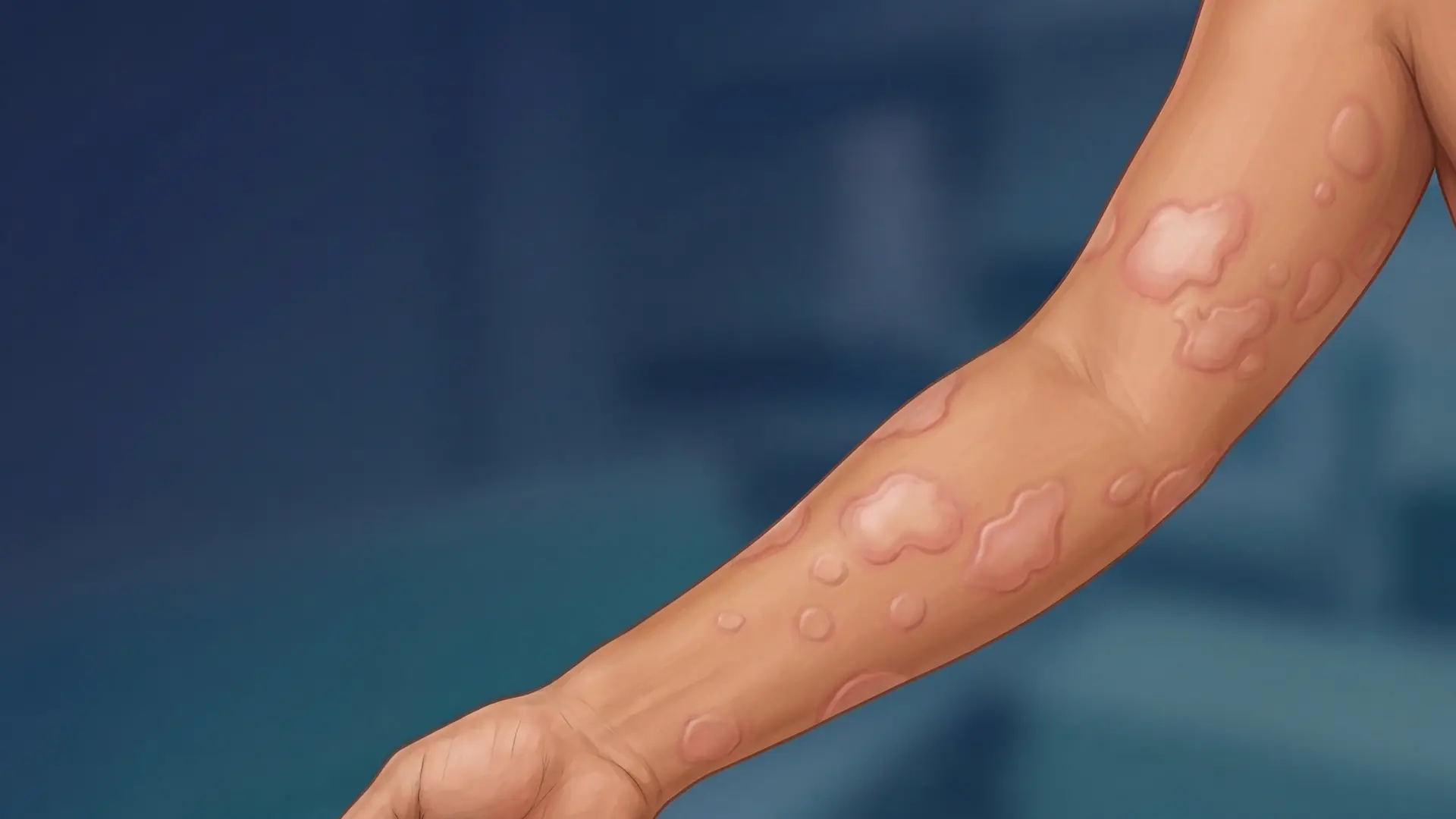
Urticaria knowledge · by Asoke Skin Hospital
Urticaria: the rash that comes and goes within a single day
Each urticaria wheal usually fades on its own within 24 hours without leaving a trace. This is the key feature that separates urticaria from other rashes — and the first thing a dermatologist will ask about.
24
Twenty-four hours is the line dermatologists use — a single wheal usually lasts no longer than this.
If the same wheal lasts longer than that, or leaves a bruise or dark mark, it may not be ordinary urticaria.
Reviewed by the dermatology team of Asoke Skin Hospital
Published · Last reviewed
Understand urticaria — from the first wheal to chronic hives
Urticaria is a common skin condition: raised, red, itchy wheals that can appear anywhere on the body. Most cases clear on their own, but some keep recurring and become chronic urticaria. This site gathers what dermatologists want patients to understand — from causes and diagnosis to treatment under the international guideline.
Real educational photographs: varied skin appearances
Real educational photographs from the owner-approved set; not presented as hospital patients or hospital cases, and not a substitute for diagnosis by a physician.
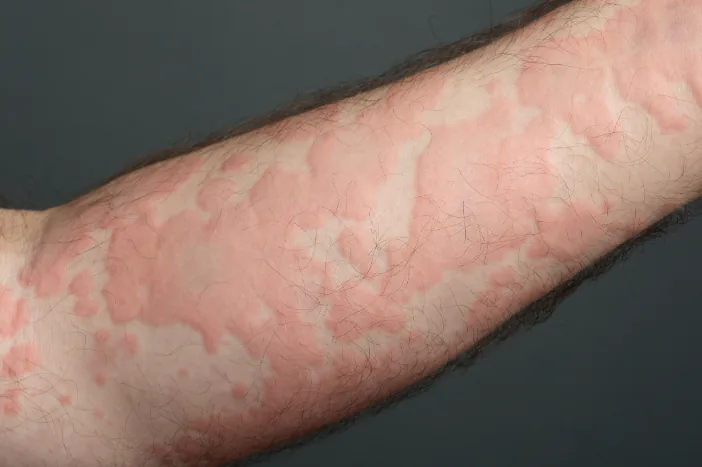
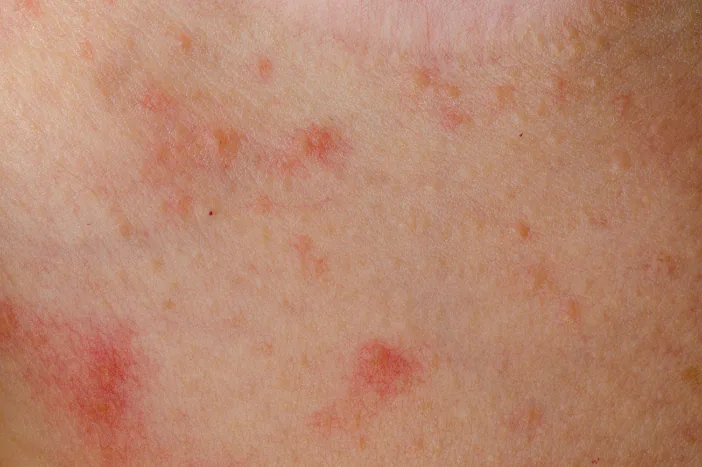
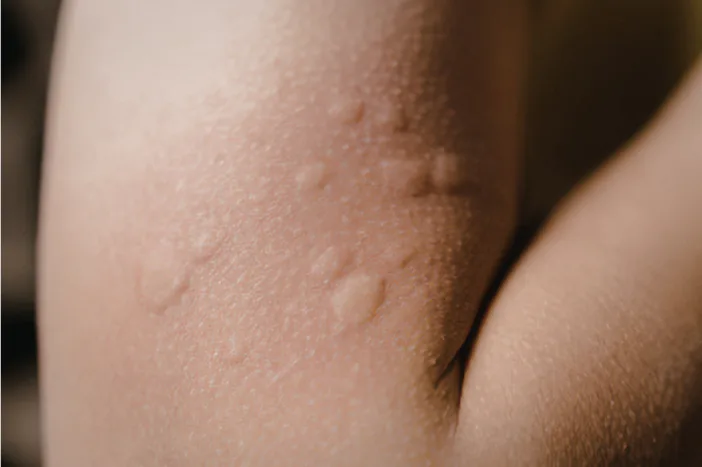

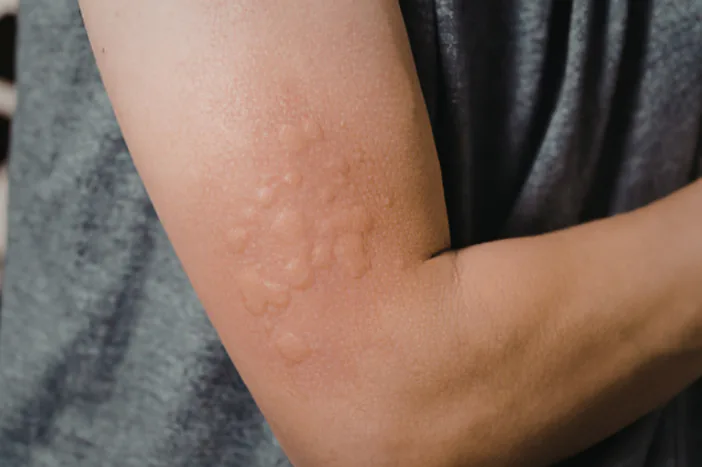
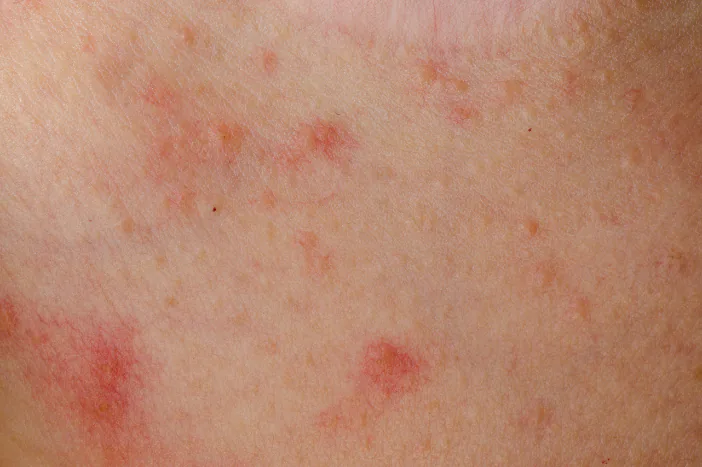
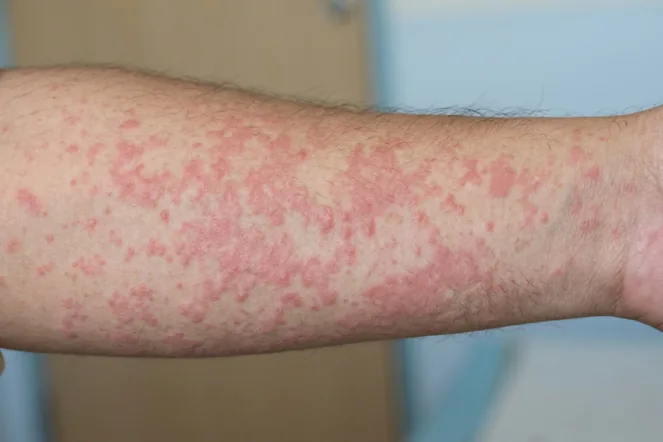
Choose what you want to know
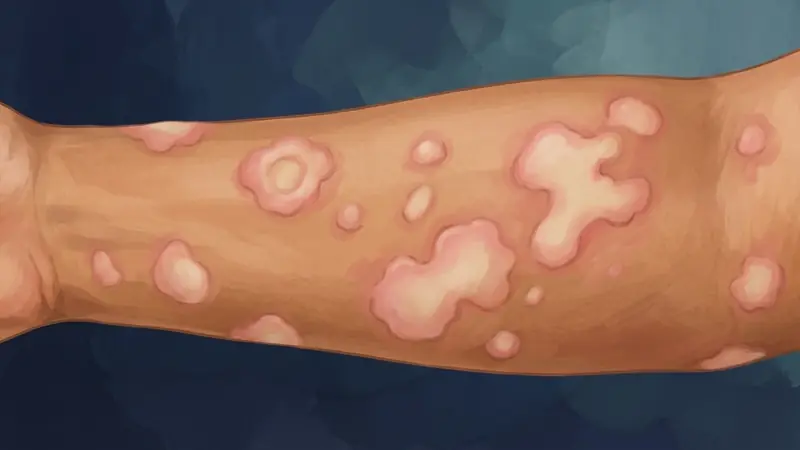
What is urticaria (hives)? Symptoms and how it differs from other rashes
Urticaria causes raised, red, itchy wheals that each usually fade within 24 hours without leaving a trace. Learn what the rash looks like, the types of urticaria, and how to tell it apart from other rashes.Read more →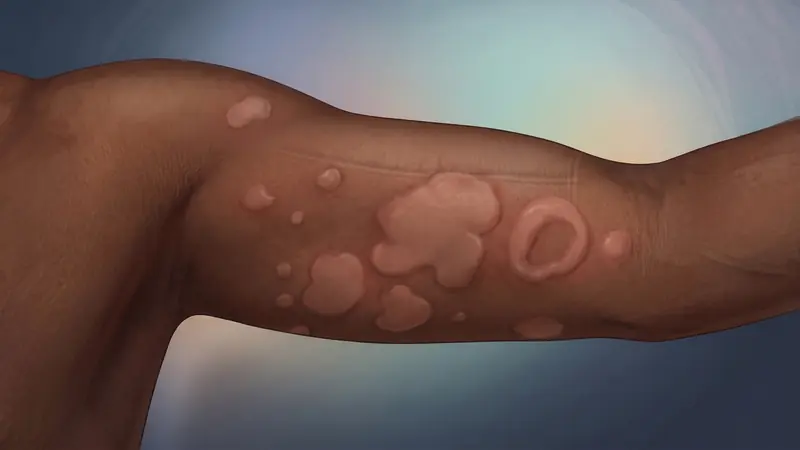
What causes urticaria? Common triggers explained
Acute and chronic urticaria have different causes. Chronic urticaria is usually not caused by food allergy. Understand the mechanism and the triggers that actually matter.Read more →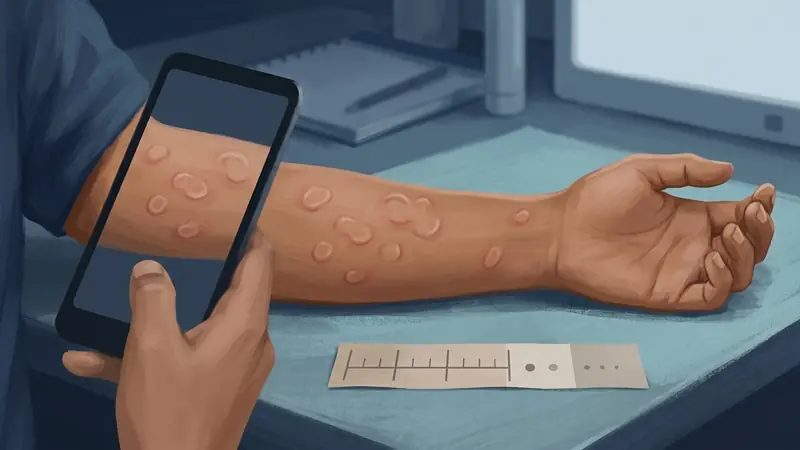
How doctors diagnose urticaria — are blood tests or allergy tests needed?
Urticaria is diagnosed mainly from your history and a physical exam. Not everyone needs blood tests or allergy testing — learn when they are needed and when they are not.Read more →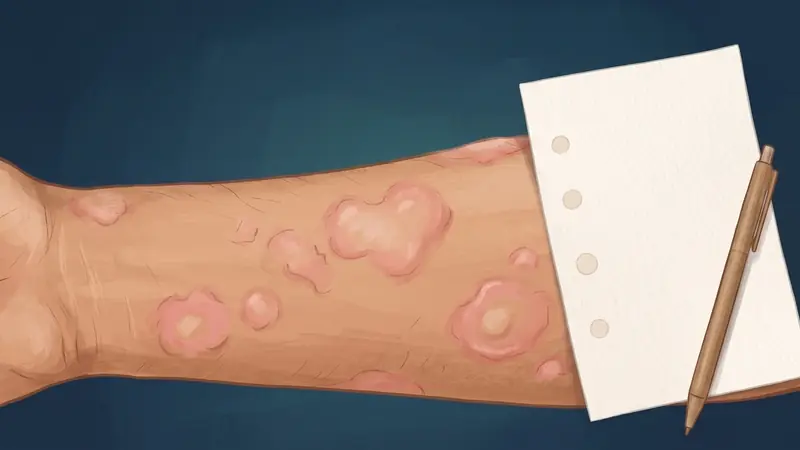
How is urticaria treated? Taking antihistamines the right way
The international guideline treats urticaria in steps, starting with non-drowsy antihistamines up to newer options for hard-to-control cases. Understand each step and use medicines safely.Read more →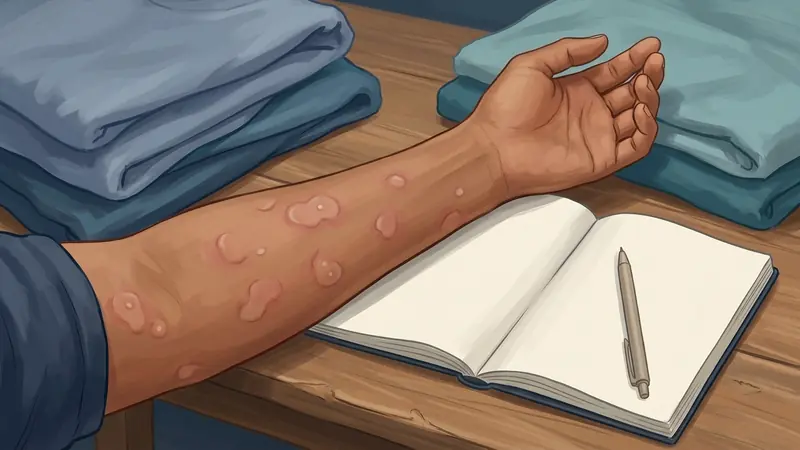
Living with chronic urticaria while keeping life normal
Chronic urticaria disturbs sleep, work and confidence — but it can be managed with consistent treatment, avoiding your flare factors, and an accurate understanding of the disease.Read more →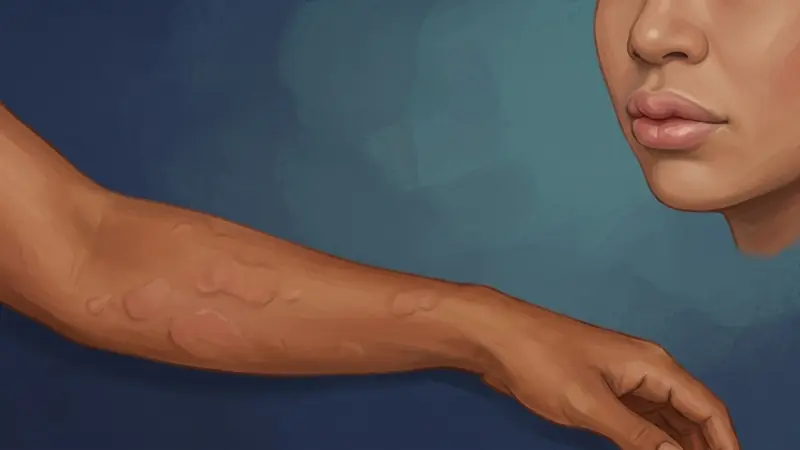
Which urticaria needs a doctor — and which needs the hospital right now
The danger signs that need immediate hospital care, and the symptoms that warrant a dermatologist appointment. Know the line clearly, so you are neither careless nor needlessly worried.Read more →Frequently asked questions about urticaria
Short, clear answers to what urticaria patients ask most.
What causes urticaria?
Urticaria wheals appear when mast cells in the skin release histamine, making the skin swell and itch. Triggers differ between people — infections, medicines, foods (in genuine allergy), stress, or physical stimuli such as cold and pressure. In most chronic urticaria no clear external cause is found.
How long do hives last?
Each wheal usually fades within 24 hours, though new ones may appear. Acute urticaria mostly clears within days to a few weeks. If it keeps coming and going beyond 6 weeks it is chronic urticaria, and you should see a dermatologist.
Is urticaria contagious?
No. Urticaria is not caused by a transmissible germ. Touching, sharing items, or being near someone with hives cannot give you urticaria.
What should I avoid eating with urticaria?
There is no blanket forbidden-food list that applies to everyone. Avoid only foods proven to cause you genuine allergy. Alcohol and NSAID painkillers can flare the rash in some people. Cutting out many food groups without medical advice does not speed recovery.
How long does each of your wheals last?
Slide to the approximate number of hours one wheal lasts before it fades.
Longer than 24 hoursA fixed wheal lasting over 24 hours, or one that leaves a bruise or dark mark, may not be ordinary urticaria. See a dermatologist for assessment.
This tool is for basic self-observation only — it is not a diagnosis.
Worried about your rash?
If the rash keeps recurring, lasts beyond 6 weeks, or worries you, seeing a dermatologist is the most direct path. Asoke Skin Hospital offers dermatologist consultations every day, walk-in, no appointment needed.
Contact / branches & hours