
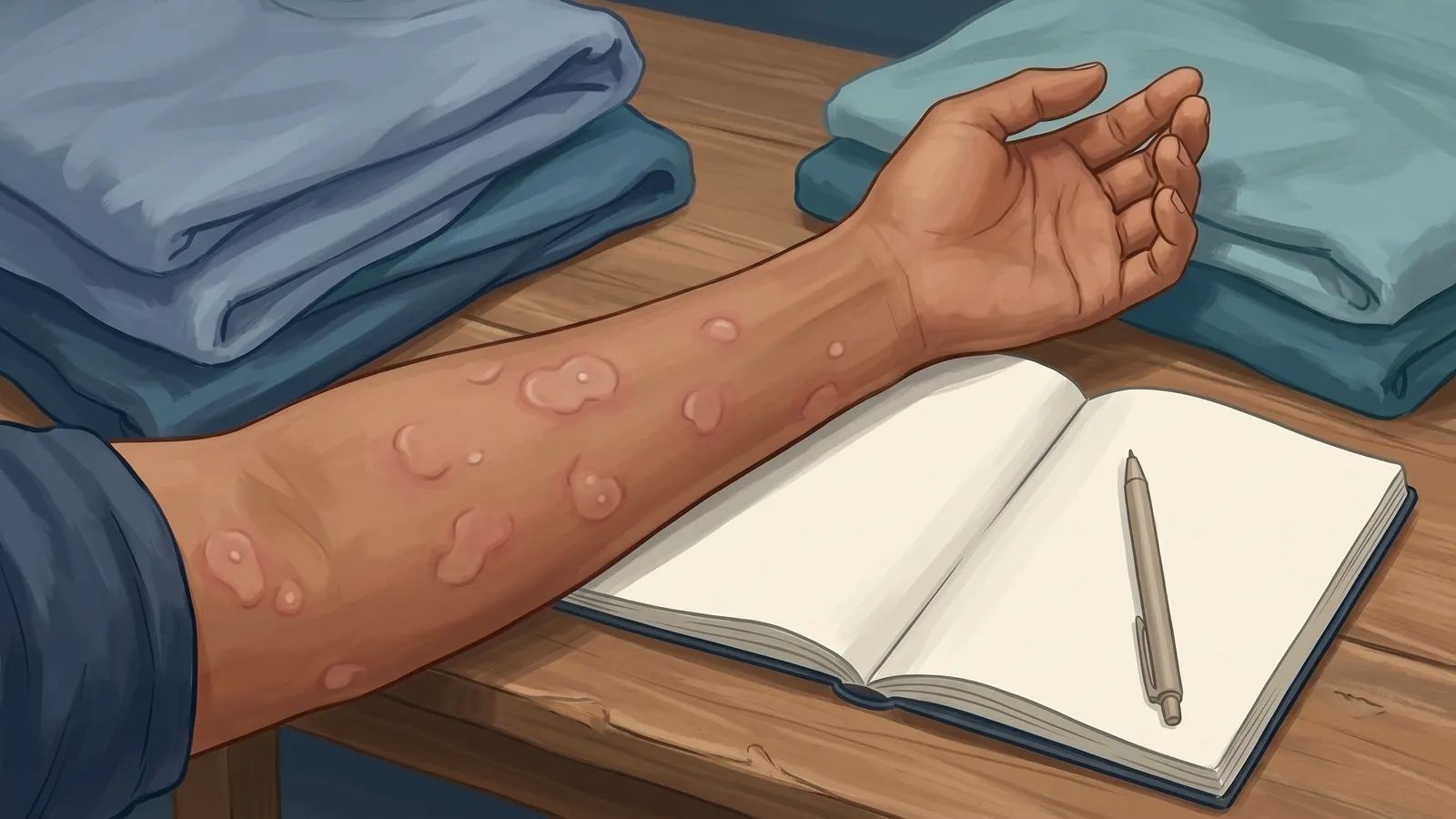
Living with chronic urticaria while keeping life normal
Compiled by Asoke Skin Hospital
Reviewed by the dermatology team of Asoke Skin Hospital
Published · Last updated · Last reviewed
In short: Chronic urticaria is a controllable condition, and in many patients symptoms can settle over time. Meanwhile, taking your medicine consistently, knowing your own flare factors, and tracking symptoms systematically let you sleep, work and live normally.
Will chronic urticaria go away?
Chronic spontaneous urticaria can gradually settle on its own in many patients as time passes, although no one can predict in advance who will clear and when. What can be said is that while the disease is active, current treatment can suppress symptoms to a minimum — many people have no wheals at all while on their medicine. The goal of treatment is to keep the disease quiet; your doctor then tapers the medicine gradually once your symptoms have been stable for a sustained period.
How do I manage nighttime itching?
Itching often intrudes at night: body temperature shifts and fewer distractions make the itch feel sharper. Tips that can help include a normal-temperature shower before bed (not hot), keeping the bedroom cool, wearing loose soft sleepwear, keeping nails short, and taking your medicine at the time your doctor advises. If itching wakes you repeatedly or keeps affecting your sleep, tell your doctor so the plan can be adjusted — don’t just endure it.
What should I eat? Do I need to cut foods out?
For most chronic urticaria there is no blanket list of forbidden foods. Cutting out several food groups without evidence of allergy rarely improves the rash and risks poor nutrition. The safe advice: avoid only what has been genuinely proven to cause allergy or to reproducibly trigger your rash, watch whether alcohol or strongly spiced food makes your rash flare, and always consult a doctor before starting any major elimination diet.
How do I explain it to people around me?
Urticaria is not contagious, is not caused by poor hygiene, and is not “just stress in your head.” Explaining to family and colleagues that the rash comes from an immune mechanism in the skin, and that good and bad days vary, reduces pressure and makes it easier to stay consistent with treatment.
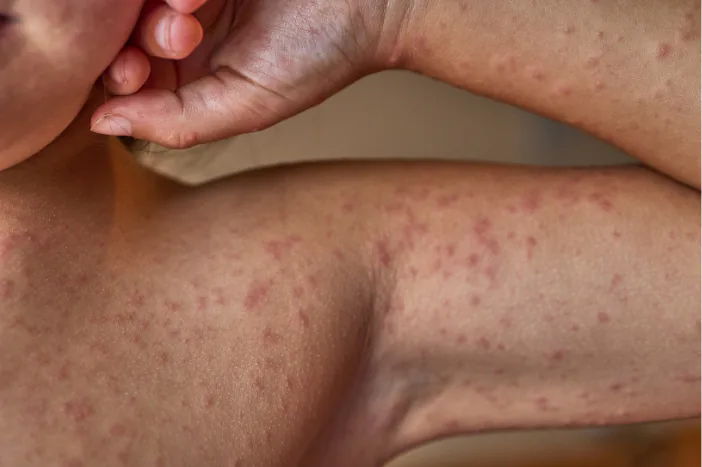
A real photograph from the approved image set
Real educational photographs from the owner-approved set; not presented as hospital patients or hospital cases, and not a substitute for diagnosis by a physician.
Should a dermatologist look at your rash?
Asoke Skin Hospital offers dermatologist consultations every day, walk-in, no appointment needed.
Contact / branches & hours