
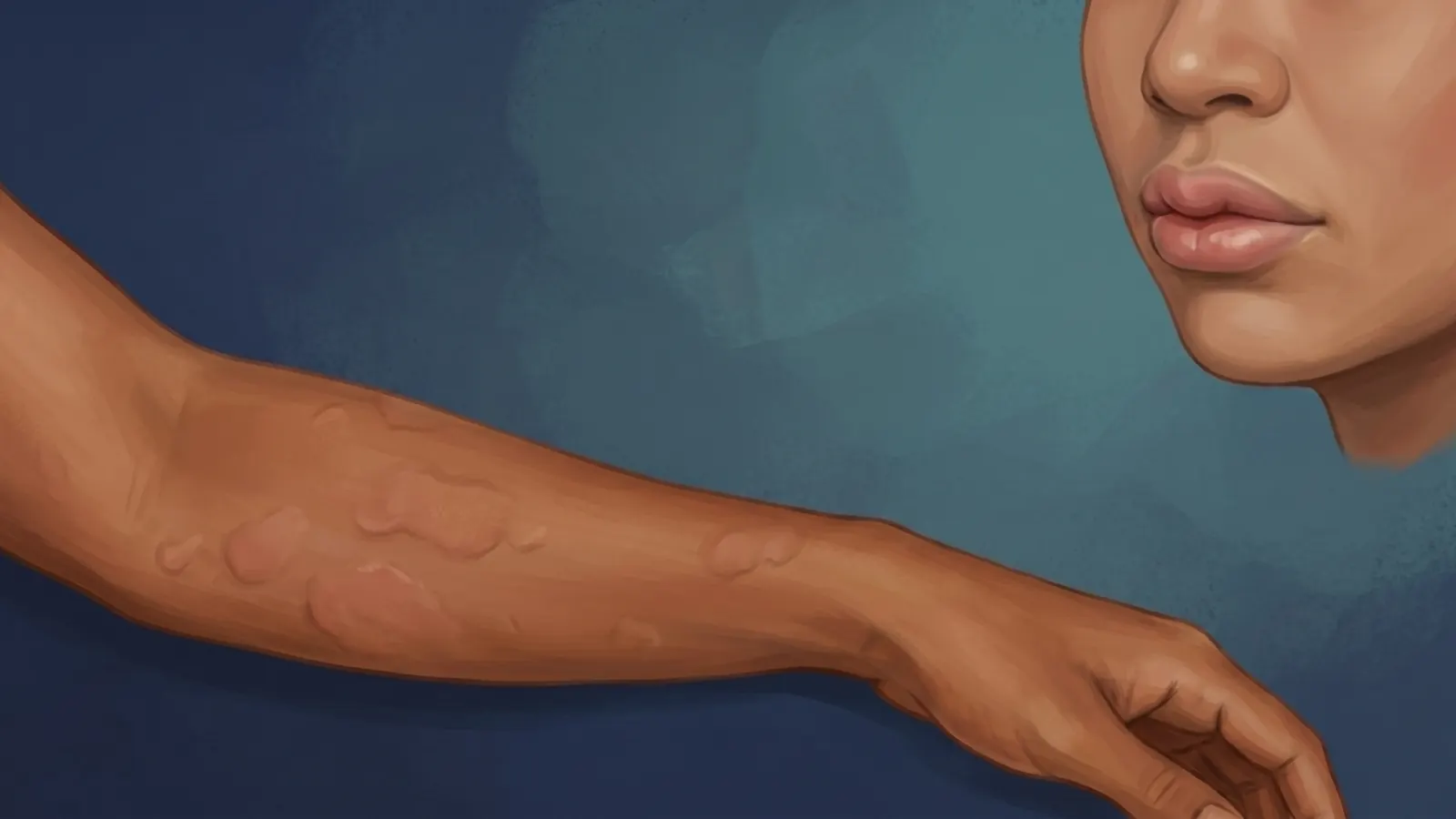
Which urticaria needs a doctor — and which needs the hospital right now
Compiled by Asoke Skin Hospital
Reviewed by the dermatology team of Asoke Skin Hospital
Published · Last updated · Last reviewed
In short: Most urticaria is not dangerous — but go to hospital immediately if you have swelling of the tongue or throat, difficulty breathing, chest tightness, a hoarsening voice, or dizziness and near-fainting together with the rash, because these can signal a severe allergic reaction (anaphylaxis). A rash recurring beyond 6 weeks, or a single wheal lasting over 24 hours, warrants a dermatologist appointment.
Emergency signs — go to the nearest hospital now
- Swelling of the tongue, mouth or throat; difficulty swallowing
- Difficulty breathing, wheezing, or chest tightness
- A rapidly hoarsening voice
- Dizziness, lightheadedness, palpitations, or fainting
- A rash spreading rapidly over the body soon after food, medicine, or an insect sting, together with any of the above
These fit a severe allergic reaction that needs immediate treatment. Do not wait at home and do not drive yourself. If symptoms are worsening, call an ambulance (dial 1669 in Thailand).
Symptoms that warrant a dermatologist appointment
- A rash that keeps coming and going for more than 6 weeks (the definition of chronic urticaria)
- A fixed wheal lasting more than 24 hours, hurting or burning more than itching, or leaving a bruise or dark mark when it fades
- Fever, joint pain, or unusual fatigue accompanying the rash
- Repeated eyelid or lip swelling without wheals
- Symptoms not controlled by a standard antihistamine dose, or affecting sleep and work
- A rash in a young child, during pregnancy, or with multiple underlying conditions
Seeing a doctor at Asoke Skin Hospital
Asoke Skin Hospital is a specialized dermatology hospital where dermatologists see patients on a walk-in basis, no advance appointment needed. Branch locations, opening hours and contact channels are on the hospital’s main website.
Approved real photographs showing infants
Real educational photographs from the owner-approved set; not presented as hospital patients or hospital cases, and not a substitute for diagnosis by a physician.


Where is your rash on the 6-week timeline?
Six weeks is the international guideline’s line between acute and chronic urticaria.
- Weeks 0–1Early acute urticariaUsually resolves on its own — manage symptoms and observe for triggers.
- Weeks 1–6Still within the acute rangeIf wheals are frequent or disturb sleep or work, see a doctor now — no need to wait for the 6-week mark.
- Beyond 6 weeksMeets the definition of chronic urticariaSee a dermatologist to plan longer-term treatment.
At any stage: emergency signs (tongue/throat swelling, difficulty breathing, near-fainting) mean go to hospital immediately.
Should a dermatologist look at your rash?
Asoke Skin Hospital offers dermatologist consultations every day, walk-in, no appointment needed.
Contact / branches & hours