
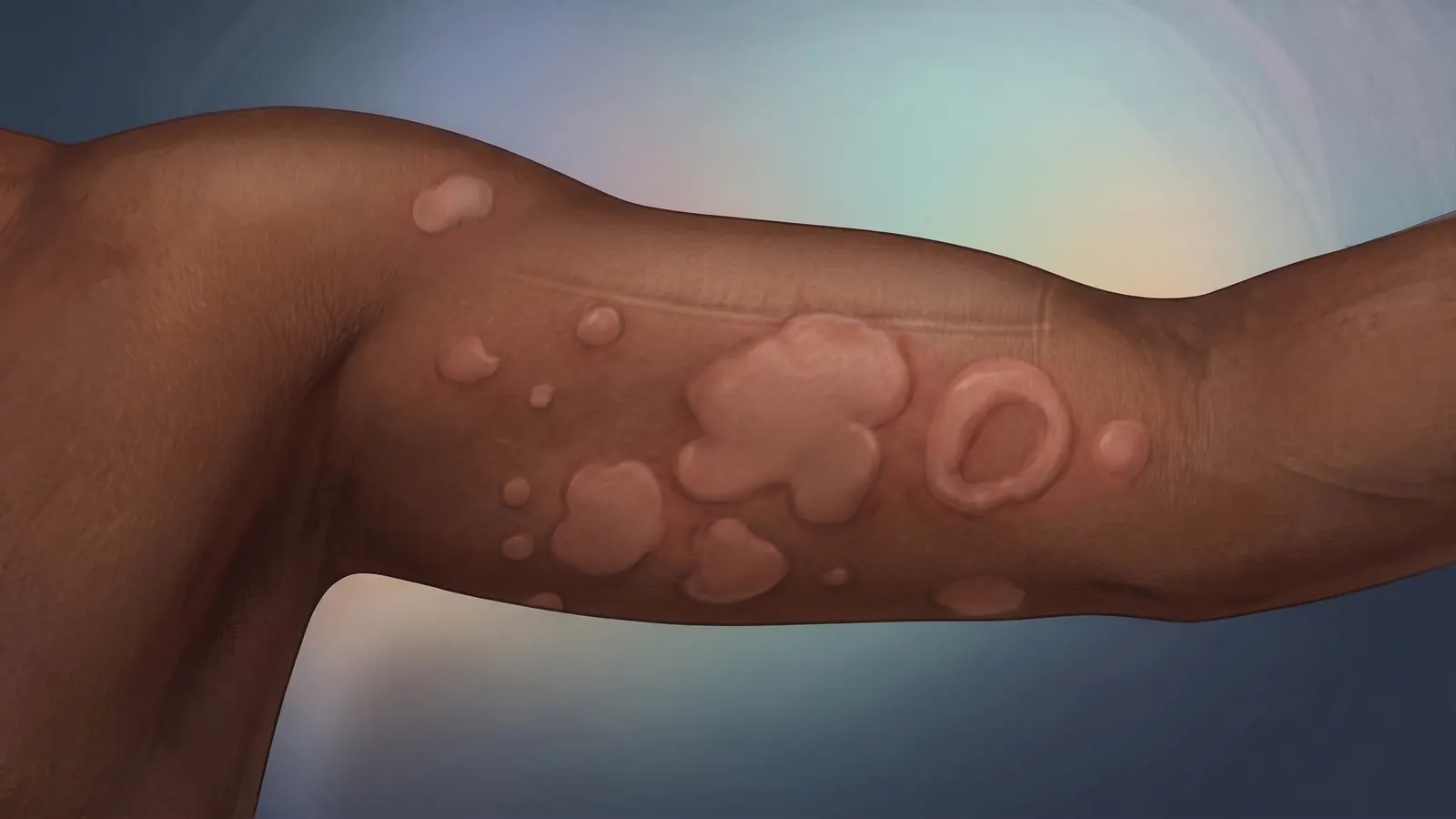
What causes urticaria? Common triggers explained
Compiled by Asoke Skin Hospital
Reviewed by the dermatology team of Asoke Skin Hospital
Published · Last updated · Last reviewed
In short: Urticaria wheals appear when skin cells called mast cells release histamine, which dilates blood vessels and makes the skin swell. Triggers differ from person to person. Acute urticaria is often linked to infections, foods, or medicines, while chronic urticaria is mostly not caused by food allergy.
What usually causes acute urticaria?
Recognized causes of acute urticaria include infections — especially viral infections in children — immediate-type food allergy, which typically causes symptoms within minutes to about 2 hours of eating, certain medicines such as NSAID painkillers or some antibiotics, and insect stings. In many cases no clear cause is found, which does not mean the condition will become more severe.
Is chronic urticaria caused by food allergy?
Usually not. Chronic spontaneous urticaria arises from the immune system making mast cells overreactive, and in a subset of patients an autoimmune mechanism is found. True (IgE-mediated) food allergy causes acute symptoms shortly after eating the same food every time — not a rash that comes and goes daily for weeks. Cutting out many foods at once without evidence of allergy therefore rarely improves the rash and risks poor nutrition. Talk to a doctor before removing whole food groups from your diet.
What makes urticaria flare?
Although not direct causes, these factors can make existing urticaria flare or become harder to control:
- Stress and lack of sleep
- Infections such as the common cold
- NSAID painkillers (such as aspirin or ibuprofen) in some patients
- Alcohol
- Heat, sweating, and friction from tight clothing
Why do hives appear at night?
In the evening skin temperature shifts, and with fewer distractions the itch is felt more sharply; warm bedding also plays a part. If itching wakes you often, tell your doctor so the timing or dose of your medicine can be adjusted.
What are the inducible types of urticaria?
Some people only develop wheals on repeated exposure to one specific stimulus: scratching (raised lines where the skin was scratched, called dermographism), cold, heat, sustained pressure on the skin, sunlight, vibration, sweating from exercise or hot weather (cholinergic urticaria, often described as being “allergic to your own sweat”), or water. Observing and recording your own triggers helps your doctor choose the right tests and plan treatment precisely.
Check the factors that may relate to your rash
Tick what happened in the period before the rash appeared, and bring the list to your doctor. This is self-observation only, not a diagnosis.
The more precisely you observe, the more precisely your doctor can choose tests and treatment.
Should a dermatologist look at your rash?
Asoke Skin Hospital offers dermatologist consultations every day, walk-in, no appointment needed.
Contact / branches & hours